Children Are Made of One Hundred Languages.
We Listen to Every Single One.
Our philosophy begins with a simple but transformative belief: children are not empty vessels waiting to be filled. They are already capable, curious, intelligent, and full of meaning.
Inspired by the globally respected Reggio Emilia Approach, we see childhood not as a race toward milestones, but as a deeply important season of becoming — one that deserves time, beauty, respect, and attentive listening. Our role is not to shape children into predetermined outcomes. It is to observe carefully, respond thoughtfully, and create the conditions in which they can flourish naturally.
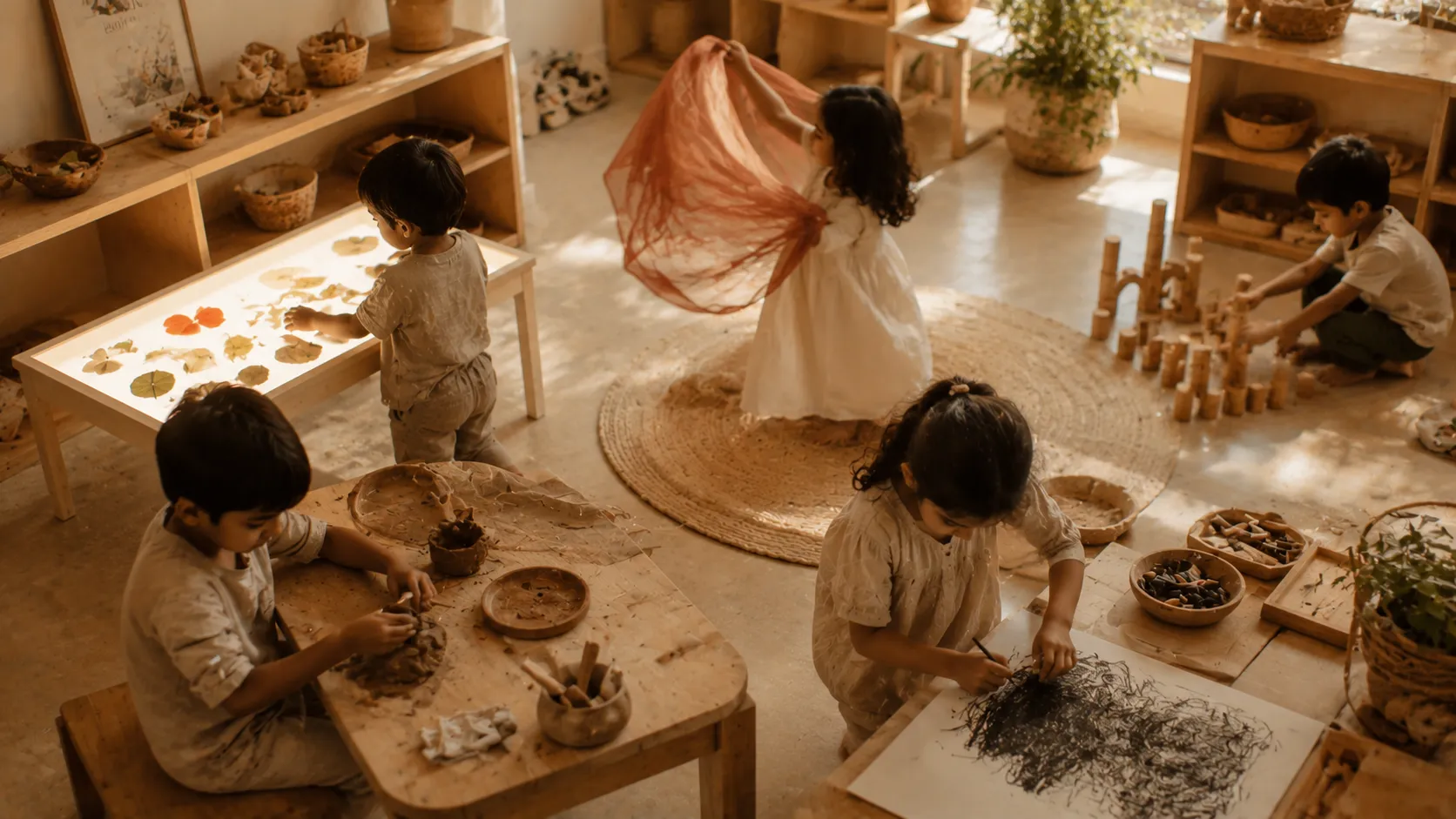
The Way We See Learning
Learning does not happen through pressure or repetition. It emerges through curiosity, relationships, exploration, and lived experience.
Rather than imposing a rigid syllabus, our educators design responsive learning experiences inspired by children's questions, interests, theories, and discoveries. A shadow on the wall may become an investigation into light. A conversation about rain may evolve into storytelling, mapping, movement, and scientific inquiry.
At Kisalaya House, learning is dynamic, collaborative, and deeply human.
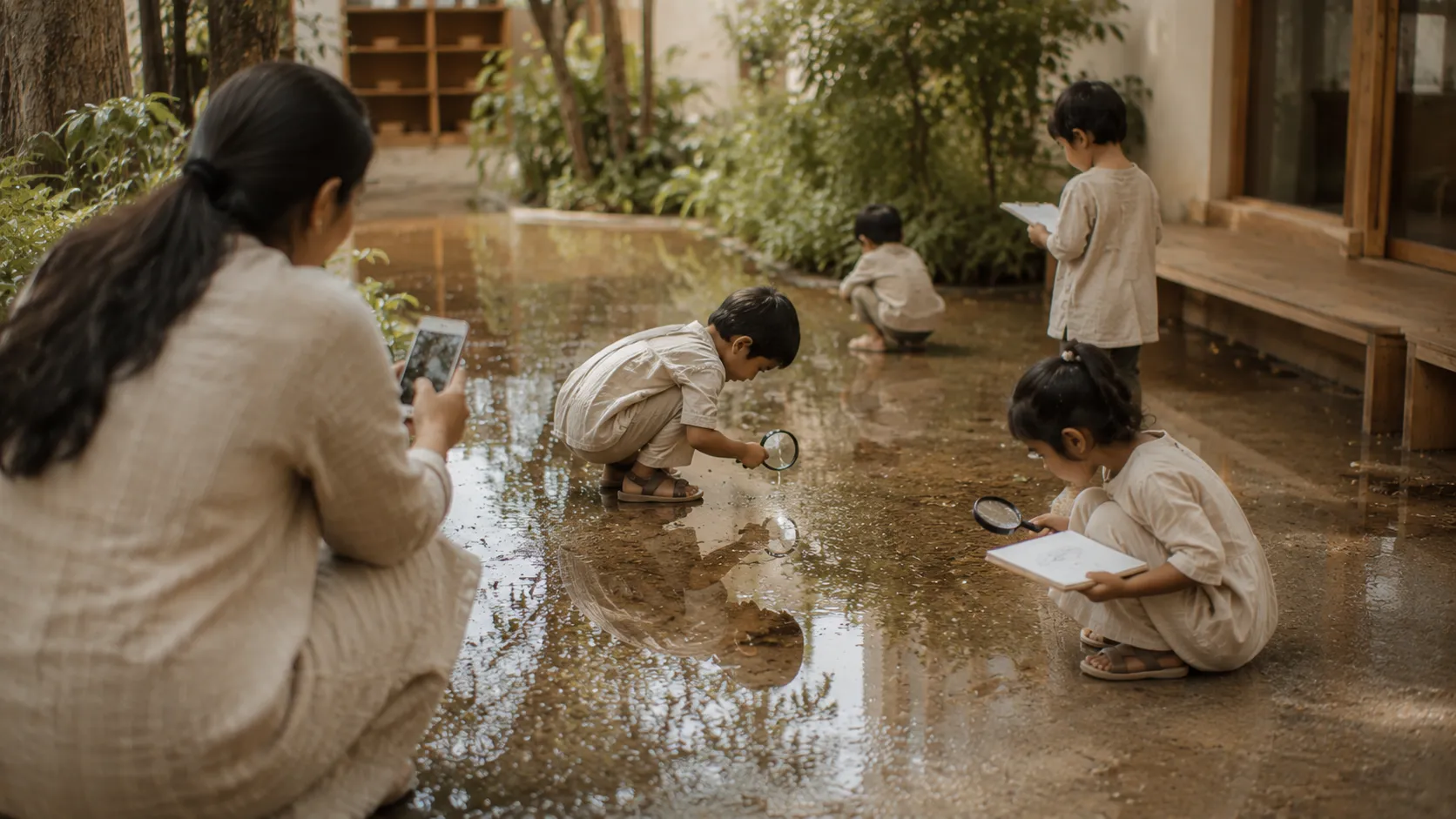
The Hundred Languages of Children
Loris Malaguzzi spoke of children having "a hundred languages" — a hundred ways of thinking, expressing, imagining, constructing, and understanding the world.
Some children communicate through words. Others through clay, movement, music, drawing, construction, storytelling, light, texture, rhythm, or silence. We honour these many languages by offering children open-ended materials, meaningful experiences, and the freedom to express themselves in ways that feel authentic to them.
Because not every important thought can be spoken aloud.
The Educator as Researcher
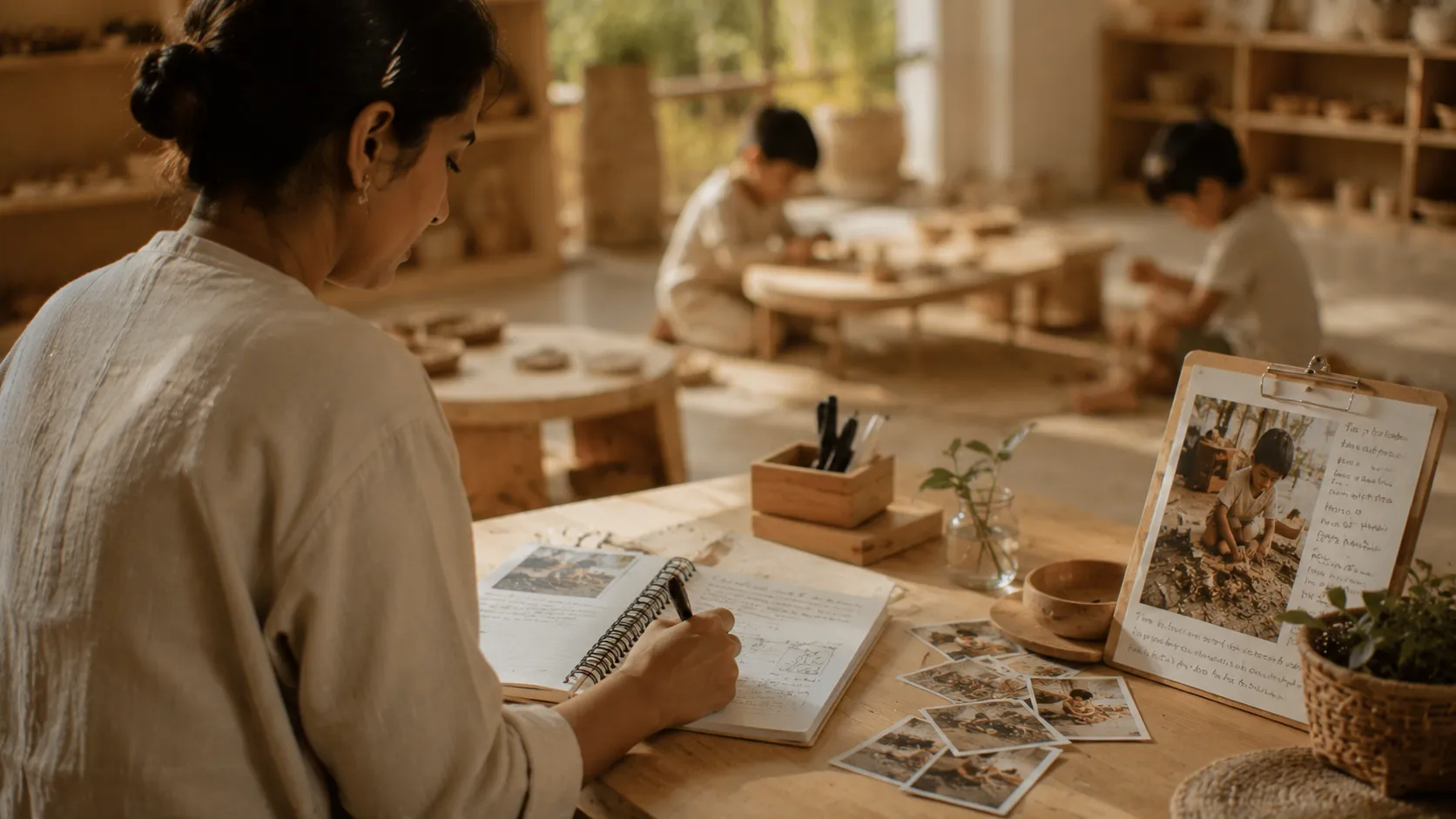
Our educators do not simply deliver lessons. They observe, listen, document, and interpret.
Each day begins with attention:
- What is this child curious about?
- What theories are emerging?
- What relationships are forming?
- What possibilities deserve to be extended?
Through ongoing pedagogical documentation, we create a thoughtful record of each child's evolving journey — making learning visible to both educators and families. This practice allows us to respond intentionally, rather than teach mechanically.
The Environment as the Third Teacher
In Reggio Emilia philosophy, the environment is considered a teacher in its own right. Every space at Kisalaya House is designed to communicate calm, beauty, belonging, and possibility.
Natural materials. Soft light. Intentional organisation. Spaces that invite collaboration, creativity, reflection, and independent discovery.
We believe children deserve environments that respect the seriousness of their thinking. Because beauty shapes behaviour, and atmosphere shapes experience.
Relationships at the Heart of Learning
Meaningful learning grows through relationships — with educators, peers, materials, nature, family, and oneself. We cultivate an environment where children feel emotionally secure, deeply respected, and genuinely heard. A child who feels safe develops the confidence to explore the world more fully.
Through ongoing dialogue, shared reflection, and transparent documentation, we build a meaningful partnership between home and school — one rooted in trust, respect, and shared understanding. Together, we create continuity between a child's inner world, family life, and learning experiences.
What We Value
Our philosophy is value-based, not performance-driven. We prioritise:
- Emotional wellbeing
- Curiosity and creativity
- Empathy and independent thinking
- Respect for self, others, and the natural world
- A lifelong love of learning
We believe academic growth emerges most meaningfully when children first feel secure, joyful, connected, and confident in who they are.
What We Choose Not to Do
Clarity of philosophy also means clarity of boundaries. We do not believe in:
- Rote learning or excessive worksheets
- Comparative ranking or performance pressure
- Accelerating childhood at the cost of emotional wellbeing
- Standardising every child's pace or pathway
- Treating happiness and education as separate goals
We believe deeply engaged children learn far more meaningfully than highly instructed ones.
Our Promise
We promise to see your child fully and thoughtfully — not as a category, benchmark, or outcome, but as a unique human being with their own rhythm, voice, and way of understanding the world. We promise to listen carefully, guide intentionally, and build relationships rooted in trust.
Because the earliest years are not simply remembered. They become the foundation from which a child experiences themselves — and the world around them.